
献给全球心衰病友的报告 北京齐天中医院 张延德 15910531101
献给全球心衰病友的报告 北京齐天中医院 张延德 15910531101
献给全球心衰病友的报告
北京齐天中医院
张延德 15910531101
A Report Dedicated to Patients with Heart Failure Worldwide;
Beijing Qitian Traditional Chinese Medicine Hospital;
Zhang Yande; 15910531101

万里江山凝秀色,五彩云霞又九宫。大家好!我也是一位心衰重病患者。
我也是一位心衰患者,终于把吃利尿剂的用法摸明白了,作为一个心衰患者,我以前总觉得利尿剂就是“水肿了就吃两片“,直接听了医生的讲解,才知道这里面的讲究太多了。今天就以我自己的经历,跟大家聊聊心衰利尿剂到底该怎么吃。
The vast landscape is bathed in serene beauty, while colorful clouds and rosy skies fill the nine palaces. Hello everyone! I am also a patient with severe heart failure. As someone who suffers from heart failure, I have finally come to understand the proper use of diuretics. Previously, as a heart failure patient, I always assumed that diuretics simply meant take two tablets whenever I had edema; only after hearing the doctor's explanation did I realize that there are far more nuances to the matter than I had imagined. Today, drawing on my own experience, I would like to discuss with you how heart failure patients should actually take diuretics.
一、先搞清楚利尿剂的分类,别乱吃药,心衰利尿剂
主要分两类,作用完全不一样。
1、能延长生命的药,必须天天吃:像螺内酯、依普利酮、非奈利酮这些,它们的利尿作用较弱,但核心作用是保护心脏,延长生存期。我自己就在吃螺内酯,哪怕没有水肿,不要随便停,必须每天按时吃。
2、改善症状的药,按需间断吃最常见的就是呋塞米(速尿),还有托拉塞米,布美他尼,托伐普垣这些。
它们不能延长寿命,但能快速缓解胸闷,水肿这些难受的症状。这类药不用天天吃,而是有症状才吃,症状缓解就停。
I. First, clarify the classification of diuretics; do not take medications indiscriminately. Diuretics for heart failure are mainly divided into two categories, which have completely different mechanisms of action. 1. Medications that can prolong life and must be taken daily: examples include spironolactone, eplerenone, and finerenone. These agents have a relatively weak diuretic effect, but their primary role is to protect the heart and extend survival. I myself take spironolactone; even if there is no edema, you should not discontinue the medication arbitrarily—you must take it daily and on schedule. 2. Medications that alleviate symptoms and are taken intermittently as needed; the most common examples are furosemide (Lasix), as well as torasemide, bumetanide, and tolvaptamide. These medications do not prolong life, but they can rapidly relieve distressing symptoms such as chest tightness and edema. These drugs are not taken daily; they are used only when symptoms are present and discontinued once those symptoms have resolved.
二、我自己的用药实操经验:
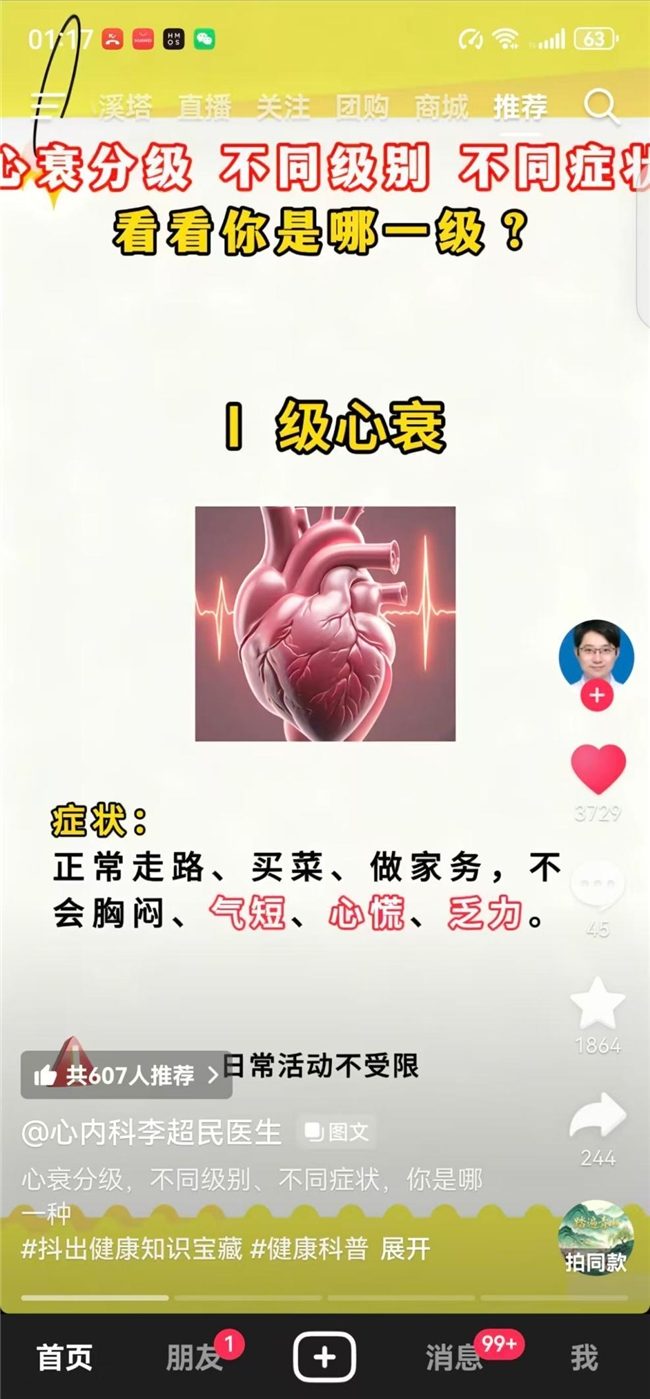
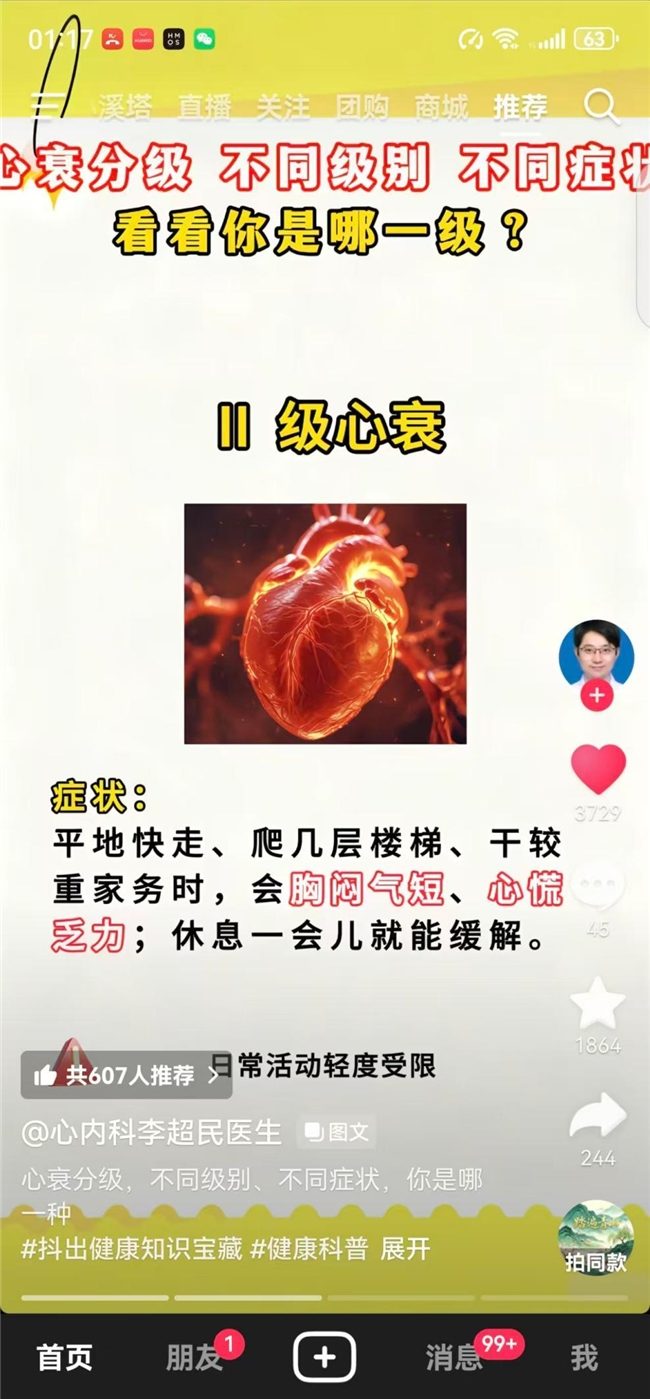
我现在心功能是 2~3 级,平时状态稳定时:呋塞米可以隔日吃一片,只坚持吃螺内酯,配合中医心衰(三组方)吃,中医心衰三组方附后。出现症状时:
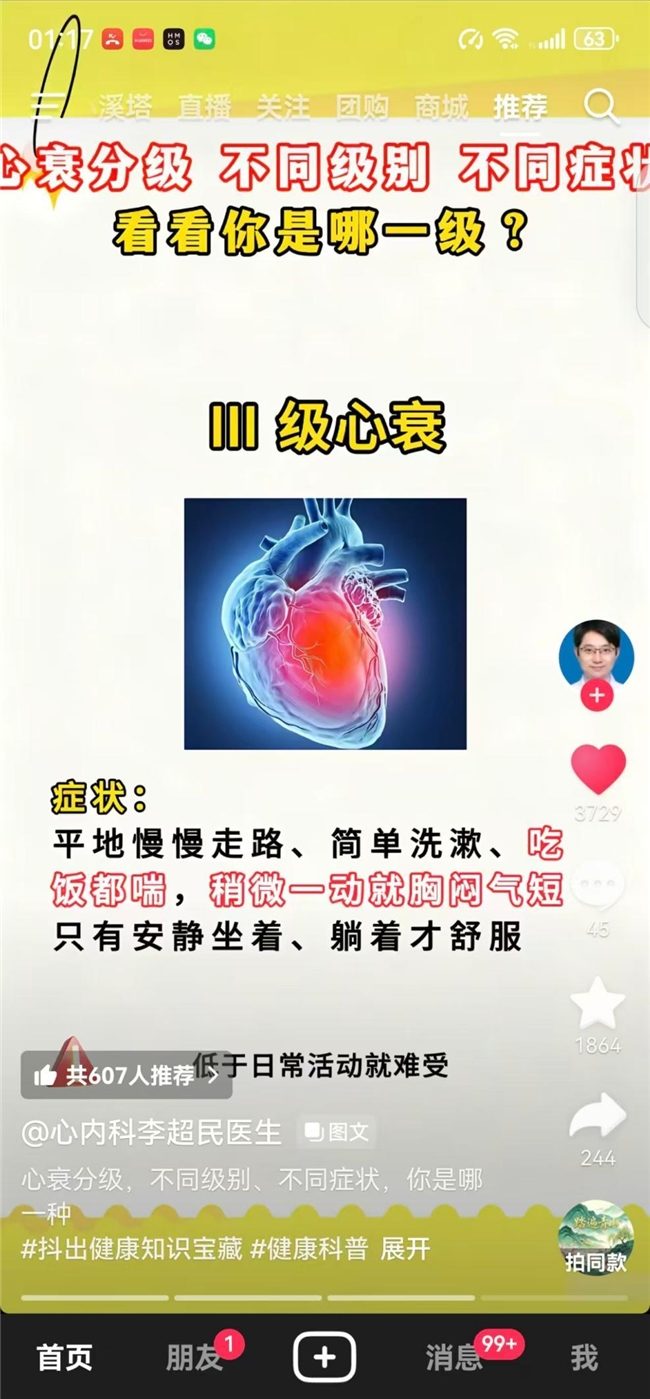
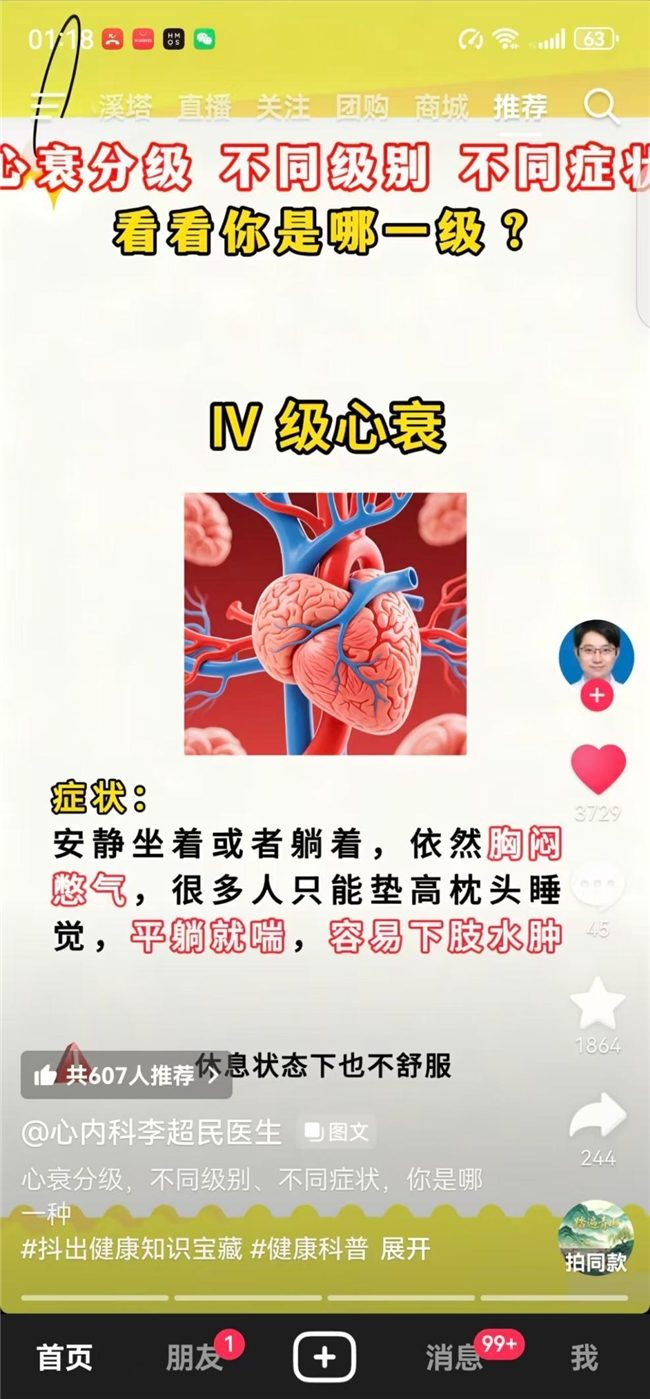
比如突然胸闷,气鳖,双下肢肿,活动后喘得历害,如果这样调整后,症状还是没改善:别硬扛,赶紧去医院,这可能提示心衰加重了。
II. My own practical experience with medication: My current cardiac function is grade 2–3. When I am generally in stable condition, I may take one tablet of furosemide every other day; I adhere strictly to taking spironolactone in combination with traditional Chinese medicine for heart failure (the three-component formula), which is provided below. When symptoms appear—for example, sudden chest tightness, shortness of breath, swelling in both lower extremities, or severe dyspnea after activity—if symptoms persist despite these adjustments, do not push through; seek medical attention immediately, as this may indicate that heart failure has worsened.
三、我踩过的坑,大家别在犯
1、误区一:水肿了就停螺内酯,我以前以为螺内酯只是利尿,水肿了就停,结果是错的,螺内酯的核心作用是抗心肌纤维化,能降低心衰患.住院率和死亡率,哪怕没有水肿,也必须长期吃。
III. Pitfalls I've Encountered—Don't Make the Same Mistake
1. Misconception 1: Discontinue spironolactone once edema appears. I previously assumed that spironolactone merely had a diuretic effect and that I should stop taking it once edema developed; this turned out to be incorrect. The primary mechanism of spironolactone is its anti-myocardial fibrotic effect, which can reduce the incidence of heart failure, hospitalization rates, and mortality rates; therefore, even in the absence of edema, it should be taken long-term.
2、误区二:呋塞米吃的越多,利尿效果越好,我有一次水肿严重,就私自加重吃呋塞米,结果导致低血压、乏力,还出现了低钾血症,呋塞米这类利尿剂,剂量不是越大越好,要根据体重,尿量和症状调整,过量会导致电解质紊乱,肾功能损伤。
Misconception 2: The more furosemide you take, the better the diuretic effect. On one occasion, I experienced severe edema and self-administered an increased dose of furosemide; as a result, I developed hypotension and fatigue, as well as hypokalemia. For diuretics such as furosemide, a higher dose is not necessarily better; the dosage should be adjusted based on body weight, urine output, and symptoms. Overdose can lead to electrolyte imbalances and renal impairment.
3.误区三:只靠利尿剂治疗心衰
利尿剂只是心衰治疗的一部分,不能替代沙库巴曲缬沙坦,卡维地洛,伊伐布雷定,这些改善预后的药物。我现在是把利尿剂和中医这些药联合用,才能稳定病情。
Misconception 3: Relying solely on diuretics for the treatment of heart failure. Diuretics are only one component of heart failure management and cannot replace drugs that improve prognosis, such as sacubitril/valsartan, carvedilol, and ivabradine. At present, I combine diuretics with traditional Chinese medicines; only in this way can I stabilize the condition.
4.误区四:不监测体重和电解质:
我每天早上空腹称体重,记录 24 小时尿量,定期复查电解质。我一开始没当回事,后来因为低钾出现了心律失常,才知监测的重要性。体重在三天内突然增加 2 公斤,就提示可能有液体潴留,需要及时调整利尿剂剂量。
Misconception 4: Failing to monitor body weight and electrolytes: I weigh myself on an empty stomach every morning, record my 24-hour urine output, and periodically recheck my electrolyte levels. At first, I did not take this seriously; it was only after developing arrhythmia due to hypokalemia that I realized the importance of monitoring. A sudden increase of 2 kg in body weight within three days may indicate fluid retention, necessitating timely adjustment of the diuretic dosage.
四、最后要给广大心衰病友说的话:
作为一个心衰患者,我深知控制病情不易,利尿剂用对了,能大大提高生活质量,用错了,反而会加 重病情。希望我总结的这些经验,能帮到和我一样的病友。记住:用药一定要听医生的,别自己私自调整剂量。附:心衰三组方:一方:夜间难以平躺,小便量少,下时浮肿,利水消肿。黄芪,桂枝,丹参,茯苓,益母草。二方:胸闷,无法平卧,呼吸不畅,慢性心衰,下肢水肿。附子,党参,茯苓子,白术,泽泻。三方:胸闷气短,舌有齿印,动则出汗。人参,黄芪,川芎,麦冬,五味子。上三方,常规水煎,温服。
报告完毕,祝大家早日康复!
IV. Final words for all heart failure patients: As a patient with heart failure, I know full well that managing the condition is challenging. When diuretics are used correctly, they can significantly improve quality of life; when used incorrectly, they may instead exacerbate the condition. I hope that the experience I have summarized can be helpful to fellow patients in the same situation. Remember: Always follow your doctor's instructions regarding medication; do not adjust your dosage on your own. Appendix: Three herbal formulations for heart failure: Formulation 1: For difficulty lying flat at night, scant urine output, and edema upon standing; for promoting diuresis and reducing edema. Ingredients: Astragalus root, Cinnamon twig, Salvia miltiorrhiza, Poria cocos, and Motherwort. Formulation 2: For chest tightness, inability to lie flat, shortness of breath, chronic heart failure, and lower-limb edema. Ingredients: Aconite root, Codonopsis root, Poria cocos seeds, Atractylodes macrocephala, and Alisma plantago-aquatica. Formulation 3: For chest tightness and shortness of breath, a tongue with tooth impressions, and sweating upon exertion. Ingredients: Ginseng root, Astragalus root, Chuanxiong rhizome, Ophiopogon root, and Schisandra berry. The above three formulations should be prepared as a conventional decoction and taken warm. This concludes the report;
I wish you all a speedy recovery.
